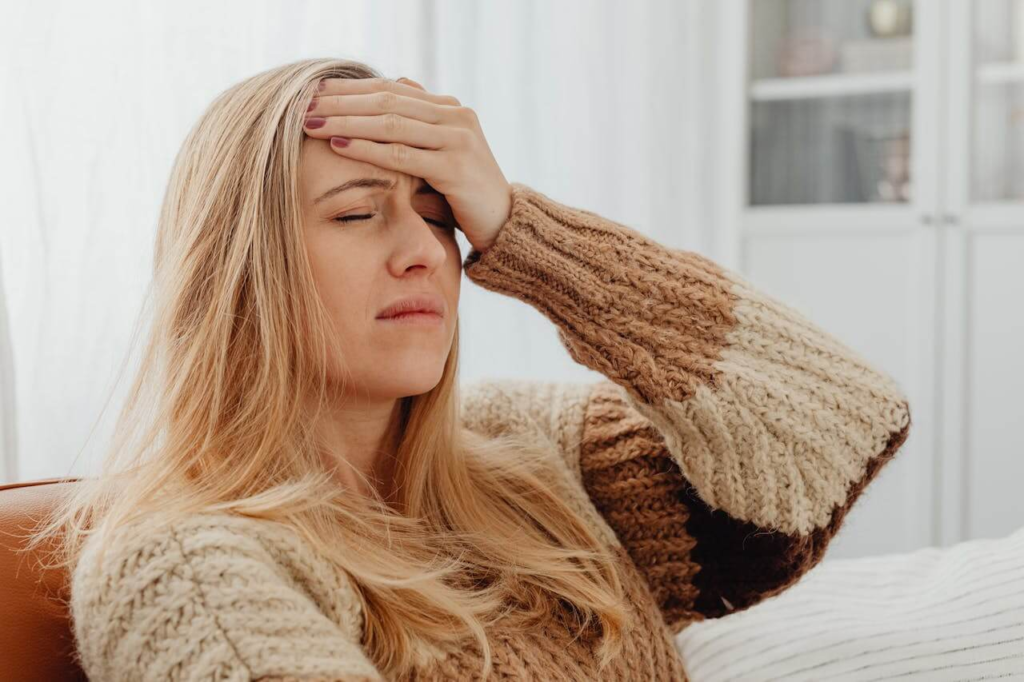
Most prenatal classes focus on baby care, and advice from friends and family often emphasizes the same. However, very few prepare you for the physical and emotional shifts that happen inside your own body.
The physical symptoms of postpartum anxiety can feel frightening especially because your body is already exhausted, healing and unpredictable after birth.
Hormones drop sharply, sleep disappears. Your nervous system is overstimulated.
Understanding postpartum anxiety symptoms is the first step toward feeling steady again.
The Physical Symptoms of Postpartum Anxiety
You probably expected to be tired, but you may not have expected your heart to race while sitting still.
Anxiety after birth isn’t “just in your head”. It activates your fight-or-flight response releasing adrenaline and cortisol, the chemicals responsible for danger.
Here are the most common physical signals of postpartum anxiety that rarely get talked about:
- Heart palpitations after birth. A racing or pounding heartbeat even without triggers.
- Postpartum anxiety chest tightness. It can feel hard to take a breath because your ribcage is becoming stiff from constant stress.
- Jaw clenching and neck tension. Waking up with sore teeth and a stiff neck from bracing for a crisis all night.
- Shaky hands and trembling fingers. Due to an overload of adrenaline making simple tasks harder.
- Appetite loss. Digestion often pauses because your brain prioritizes survival over food.
- Postpartum anxiety dizziness. Feeling unsteady is a common side effect of your blood pressure struggling to stay balanced. You might also feel like the room is spinning even if you’re lying on the bed
- Phantom crying. You hear the baby screaming while you’re in the shower even when they’re actually silent and sleeping.
- Skin tingling or buzzing. Your limbs experience a light electric sensation, because your nerves are overstimulated.
- Night sweats. A result of your hormones shifting combined with stress.
- Light sensitivity. Lights may feel way too bright when you’re overstimulated.
- Restless legs. You have a constant urge to move even when you’re exhausted.
- Aching shoulders and tension headaches. Tense muscles all day leads to dull headaches on your forehead and shoulders.
- Low body temperature. Stress-related blood flow changes causes your hands and feet become cold.
If several of these symptoms feel familiar, you’re not imagining them, and you’re not alone.
When anxiety spikes physically, it can feel quite overwhelming in the moment. That’s exactly why I created The Postpartum Anxiety Quick Reset… a simple 5-minute guide that helps calm your nervous system when your heart is racing or your body feels on edge.
You can download it here and keep it on your phone for those middle-of-the-night spirals.
How Postpartum Anxiety Causes Physical Pain
Much like what people with anxiety experience, the tension from postpartum anxiety manifests physically because your muscles remain tight when your brain won’t shut off. Your body refuses to relax even when there’s no danger or threat present. Carrying that much tension is exhausting. That discomfort, the aches and fatigue are a real, physical reaction to the pressure.
Understanding this connection empowers you to respond with care instead of frustration.
Managing Physical Symptoms
While physical symptoms can feel overwhelming, they are just one part of the bigger picture of postpartum anxiety.
If you’re unsure whether what you’re experiencing fits the full pattern, you can read more about the signs of postpartum anxiety in this guide.
Postpartum Anxiety becomes more manageable when you know how to respond to your body’s signals.
- Drop your shoulders and take a deep breath. Shallow chest breathing keeps your nervous system on high alert, whereas deep slow breaths signal safety.
- Splash cold water on your face. This physical shock helps reset your nervous system during moments of panic.
- Shake out your limbs. Now, if you feel that weird buzzing in your limbs, shake out your arms and legs. This reduces restless sensations
- Step into sunlight. Even ten minutes of sunlight can also help your internal clock find its balance again. This is especially helpful when your sleep schedule is completely non-existent.
- Narrate your actions or journal. Speaking or writing what you’re doing keeps your anchored in the present.
These small adjustments gradually train your nervous system to stand down, helping you regain control and catch your breath. Whenever possible, practice these with a partner or a loved one for extra support.
What to Avoid During Postpartum Anxiety
Certain habits prolong physical anxiety:
- Caffeine: Put that coffee down. Even small amounts of caffeine act like adrenaline, intensifying heart palpitations and shaky hands. Stick to water or herbal tea until your system finally learns how to relax.
- Skipping your meals even if you have no appetite. Low blood sugar can trigger symptoms that mimic panic attacks such as shivering and lightheadedness. Your body needs a steady supply of fuel to stay stable while your hormones shift and so, even a small snack helps stabilize your body.
- Suppressing your feelings: Stop hiding how your body feels because that internal pressure makes the tension in your jaw and shoulders much worse. Sharing your experience with trusted people eases the mental weight.
Seeking Professional Help
What you have to remember is you don’t need to wait for extreme symptoms to manifest before seeking help. Even subtle dizziness, racing thoughts, or sleepless nights are enough to book an appointment to your OB-GYN or a postpartum counselor.
You should describe exactly what your body is doing so they can check for other medical issues and provide targeted support.
Don’t Be Too Hard on Yourself
Give yourself some credit for managing a newborn while experiencing physical symptoms of postpartum anxiety. Your shaky hands, racing heart and tense muscles are valid reactions and real medical symptoms.
By recognizing these physical signs and responding appropriately through grounding techniques, sunlight, proper nutrition, and professional guidance, you can feel steady again and start enjoying motherhood with confidence.