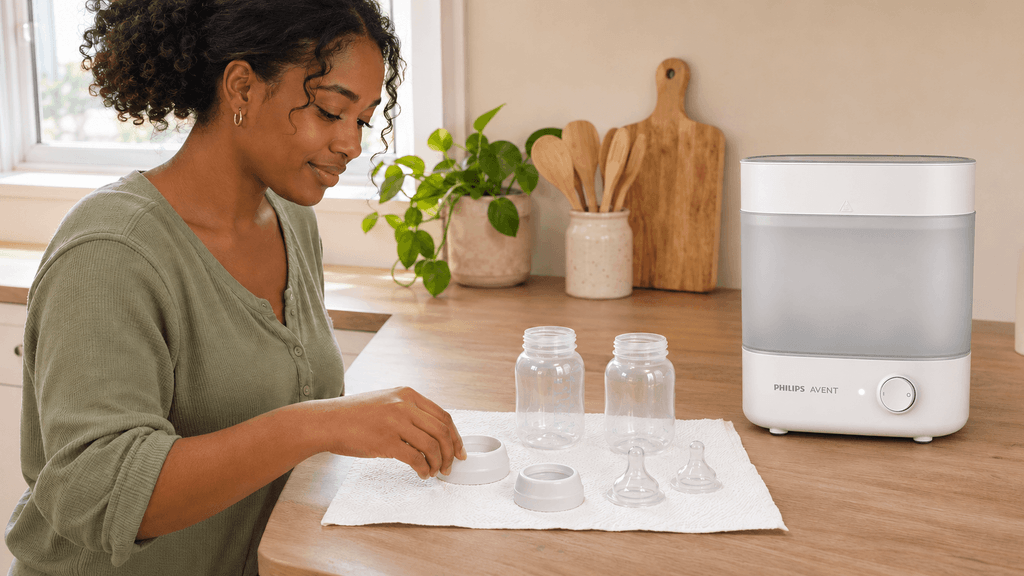
As a new mom, it can be overwhelming trying to figure out which baby gadgets are actually needed. A bottle sterilizer and a drying rack are exactly the kind of purchases that can make a first-time mom second-guess her registry. If you’re already making room for a machine beside the sink, do you really need to make room for a rack too?
You can skip the bottle drying rack if your sterilizer has a drying cycle that handles your usual load. If your sterilizer only steams, you can still skip the rack by setting up a clean spot to air-dry the parts. The decision comes down to what happens after a cycle in your kitchen.
Here are the three situations that make the difference.
1. Your Sterilizer Only Steams
Check the manual or the controls for a drying mode. An electric or microwave steam sterilizer may finish its cycle with condensation on the bottles, nipples, and collars. If you’re putting the pieces away for later, give them time to dry completely first. Follow your model’s instructions for cooling, opening, and unloading the unit.
How to Air-Dry Baby Bottles Without a Rack
Set out a clean, unused dish towel or paper towel in a spot protected from dust and dirt. Lay out the clean, disassembled pieces so you can see them individually. Give collars, nipples, and valves their own space instead of stacking them inside each other. Let the pieces air-dry thoroughly before reassembling and storing them.
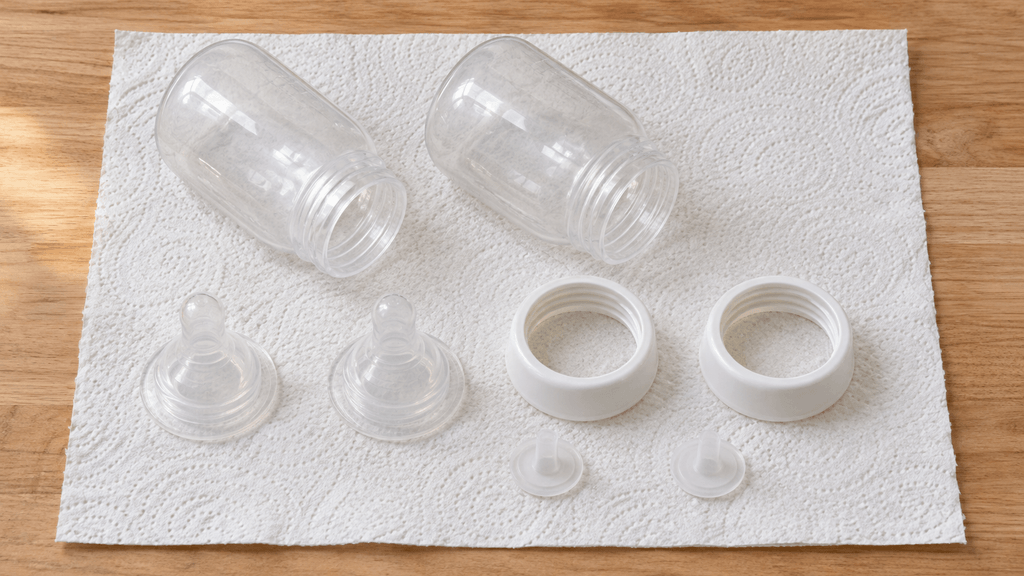
The CDC advises against rubbing or patting feeding items dry with a dish towel because that can transfer germs.
This setup can be enough if you wash a few bottles at a time. A rack becomes a convenience if bottle bodies, collars, and vent pieces routinely take over the counter. Upright posts give bottle bodies a place to drain, while a separate area for small parts makes them easier to find. A rack also adds something to wash. The CDC advises using it only for infant feeding items and cleaning, sanitizing, and drying it regularly.
2. Your Sterilizer Dries, but It’s Full or Already Running
If your machine dries the entire batch and the pieces come out fully dry, you can put them away without transferring them to a rack. Before you buy a backup, think through one normal wash. Does the machine have room for the bottles and everything they come apart into? A load with wide bottles, anti-colic vents, and pump parts can fill the available space before you reach the advertised bottle count.
When a Second Drying Spot Helps
Say the machine is halfway through a cycle when you hand-wash another bottle and several collars. Or you have a few clean pieces that your machine’s instructions say to keep out.
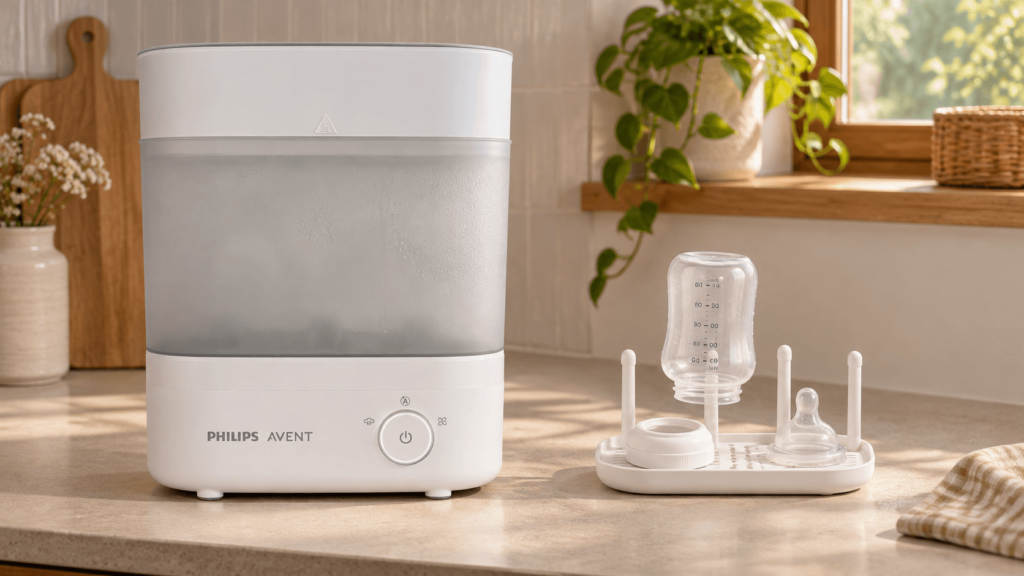
A dedicated air-drying spot gives you somewhere to put those pieces while the appliance is occupied. Check both the appliance instructions and the care instructions for the pieces you wash. Capacity and compatibility can vary even within one brand.
If this happens occasionally, a fresh towel setup may be enough. If you’re making room for an overflow batch most days, a separate rack can save you from clearing a new spot each time. For a lid over dry pieces between feeds, the guide to baby bottle drying racks with covers compares how much room different covers need when open and how you reach the parts inside.
3. Your Bottles Are Dry, but the Clean Parts Still Pile Up
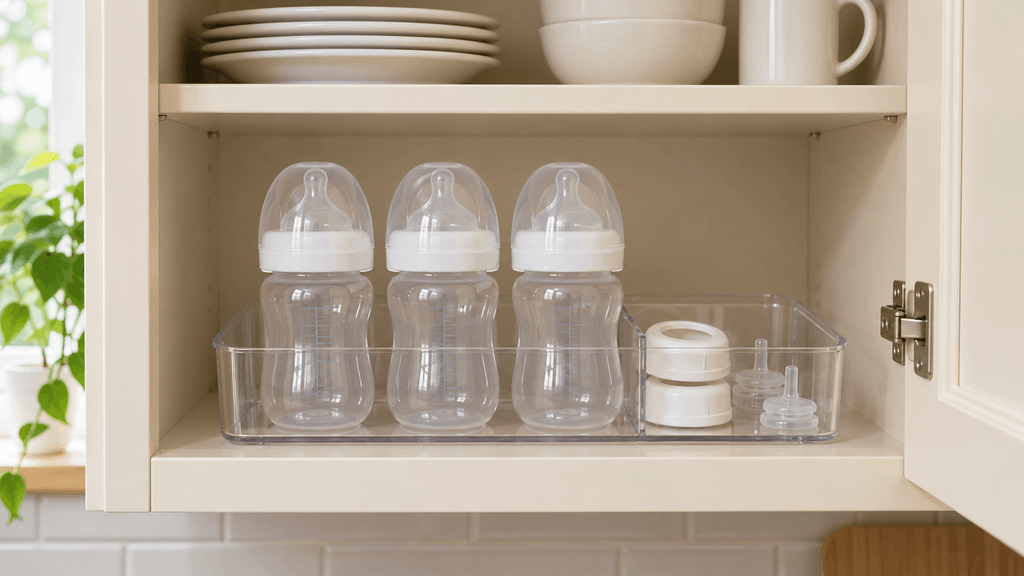
Sometimes the machine handles drying just fine and the annoyance starts when you unload it. You have clean bottles ready for later, but the collars are next to the sink, the vent pieces are on a towel, and you need the machine empty for the next batch. In that situation, a dedicated place to put dry parts solves the problem. A clean, protected spot in a cupboard can work if you have room.
When a Storage Box Is Worth the Counter Space
A countertop storage box can make sense if you reach for bottles throughout the day and want all their pieces in one place. Think about whether you tend to wash another batch before using up the first one. If you do, a separate drying area and enclosed storage compartment let you grab a dry bottle while the new batch is still draining. If you usually finish one batch before starting the next, a single compartment can do both jobs at different times. The guide to baby bottle drying racks with storage boxes compares those layouts, including a cabinet with a separate drying tray on top.
If you’re still building your registry, you can leave the rack off for now. Start with the drying cycle or a clean air-drying spot, and see where the routine gets awkward. If the same problem keeps coming up, you’ll know whether you need more drying space or somewhere to put the pieces once they’re dry.
Frequently Asked Questions
Do you need a baby bottle drying rack?
Not strictly. You need a clean place to air dry washed and sterilized parts, and a clean place to store them once they are dry. A rack is one convenient way to do that. A clean towel or paper towel also works, and the CDC says towel drying is probably more hygienic.
Can you air dry baby bottles without a drying rack?
Yes. Lay them on a clean, unused dish towel or paper towel in a spot protected from dust and dirt, and let them dry thoroughly before storing them. The setup steps above show how to arrange everything so air can circulate.
Do you need a drying rack with a bottle sterilizer and dryer?
Not for every batch. A sterilizer dryer handles most loads on its own, but a small drying spot is useful for second batches, hand washed pieces and any time the machine is busy or out of action.
How long do bottles stay sterile in the sterilizer?
Many makers say contents stay sterile for up to 24 hours when the lid stays closed, and some say the clock ends once the lid is opened. A few models claim longer, so check your own manual for the time that applies to you.
Do I have to sterilize bottles every day?
Not always. The CDC says to clean feeding items daily and sanitize them for extra germ removal, or daily if your baby is under 2 months old, was born premature or has a weakened immune system. Your pediatrician can tell you what is right for your baby.
Can I put pump parts and pacifiers in the sterilizer?
Often yes, but check both your sterilizer manual and the item’s own instructions. Baby Brezza’s manual, for example, says pump parts and other items safe for steam sterilization can go in its baskets. If you cannot confirm an item is safe for steam, wash it and air dry it instead.
Final Thoughts on Whether You Need a Bottle Drying Rack With a Sterilizer
So, do you need a bottle drying rack if you have a sterilizer? Probably not as a must have. However, you do need a plan for damp parts and a home for clean ones. Once that plan is in place, bottle duty gets a little less of a puzzle, and you get a bit of your counter back.