You finally get your baby to sleep and you lay down, expecting your body to follow. But it doesn’t.
Your chest stays tight. Your ears are still alert, waiting for the next sound. Your mind starts looking for possible things that could go wrong, quietly at first… then louder.
What if something happens?
What if I don’t hear the baby?
And before you can stop it, your body is already reacting. Your heart starts pounding, your hands feel unsteady, and you feel this strange urgency in your chest like you need to get up and check on your baby again, despite the fact that you just did.
This is what postpartum anxiety often feels like. Not just worry, but a body that won’t switch off.
If you haven’t fully understood why this is happening, this will help you connect the dots: Postpartum anxiety in first-time moms: real symptoms, hidden triggers and what helps.
Once your body is in this state, thinking your way out of it rarely works. You need something that works with your body, not against it.
What Grounding Actually Does In Postpartum Anxiety
When anxiety hits after having a baby, your nervous system acts like there’s danger, even when everything around you is quiet and safe. Medical sources like Cleveland Clinic explain that’s why you feel:
- Wired but exhausted
- Alert but drained
- Tense with not clear reason
Grounding techniques work by trying to calm your thoughts first by giving your brain something real to focus on in the present such as temperature, pressure, texture, and sound instead of holding on to imaginary threats.
This shift matters because when your body starts to settle, your thoughts will follow.
Simple Grounding Techniques For Your Postpartum Anxiety That Calm Your Body Fast
The good thing about these techniques is that you don’t need to prepare for them. They are things you can do in the exact moment your body starts to spiral.
1. Use cold to interrupt the surge
When you feel that gripping sensation in your chest or your heart starts racing, go straight for something cold such as an ice pack, a bag of frozen peas, a cold can of soda or even running cold water over your wrists.
Press it hard against your chest or the back of your neck. That sudden, sharp chill cuts through the panic quickly because your body has to respond to temperature first. It pulls you out of that internal spiral and back into something real.
2. Push your body into something solid
When you feel restless or shaky, place your hands against a wall and push. Not lightly, actually press into it as hard as you can for about ten seconds, then release.
That pressure gives your body a clear physical signal and helps discharge some of that nervous energy that builds up during anxiety.
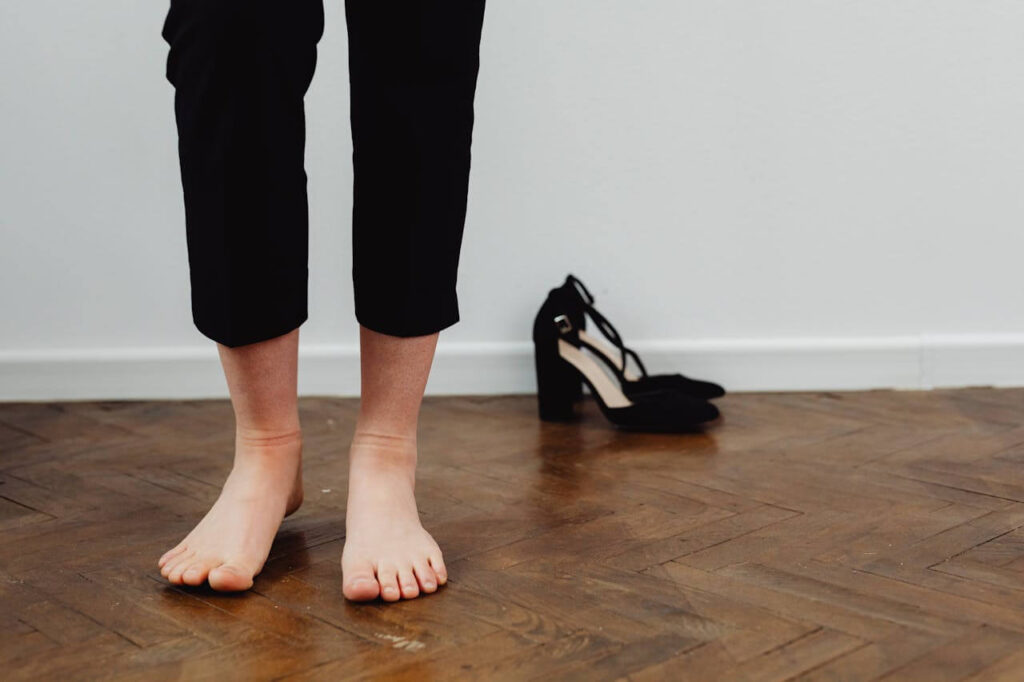
3. Stand barefoot and feel where you are
If your thoughts feel loud and your body feels slightly “off,” take off your shoes and stand on a hard surface such as tile, wood or even a cold floor.
Notice the pressure under your feet and shift your weight slightly. Let your attention drop out of your head and into your body. This may sound small, but it helps bring you back into the present moment in a very physical way.
4. Slow your exhale, not your inhale
When anxiety builds, your breathing changes without you noticing.
Instead of trying to take deep breaths, focus on breathing out slowly. Exhale normally, then stretch your exhale longer than feels natural, like you’re gently blowing through a straw.
This tells your nervous system that the “threat” has passed, even if your thoughts haven’t caught up yet.
5. Name what’s around you out loud.
When you find yourself in a constant cycle of worry, look around the room and name 5 objects you see, like “white pillow,” “sleeping baby,” or “wooden table.” Hearing your own voice describe your environment helps break the loop of scary thoughts and reminds your brain where you actually are.
6. Hold something heavy
Pick up something with weight like a full laundry basket, a stack of books, or even your baby if it feels right in the moment and walk across the room.
The physical load brings your awareness back into your body and helps counter that floaty, disconnected feeling that anxiety creates.
When This Keeps Happening (and You’re Tired of Managing It)
While these techniques help in the moment, you might find that your body is always on edge, nights feel especially hard or the anxiety keeps coming back. The truth is that there’s a deeper pattern behind it and it’s common particularly at night, when everything is quiet but your mind won’t slow down.
And if you’re feeling like you’re out of control and starting to wonder whether you need more support, this will help you understand when to take that step: When to seek help for postpartum anxiety.
A Small Reset You Can Come Back to Anytime
If you want something simple to follow in the moment, I put together a short reset you can keep on your phone.
It walks you through:
- What to do when anxiety spikes
- How to calm your body in under 5 minutes
- What actually works a night when everything feels louder
Download the 5-minute Calm Plan for Postpartum Anxiety
You’re Not Doing Anything Wrong
Ultimately, you’re not a failure for not doing as well as you thought you would as a new mom. Give yourself some grace because your body trying very hard to protect your baby, but it just hasn’t learned how to stand down yet. With the right tools, it will.