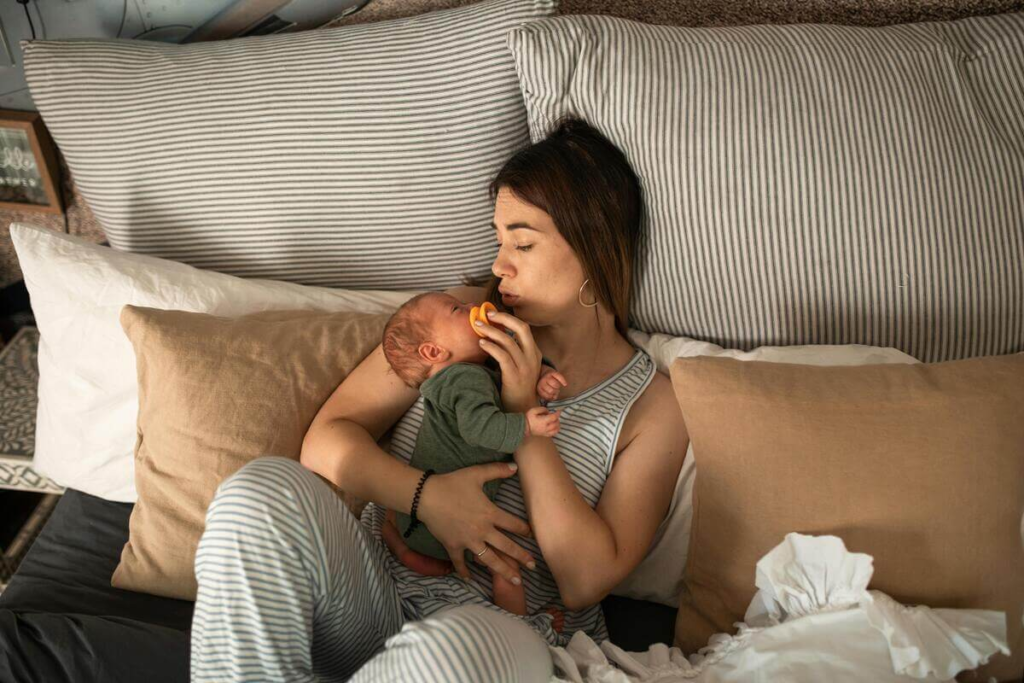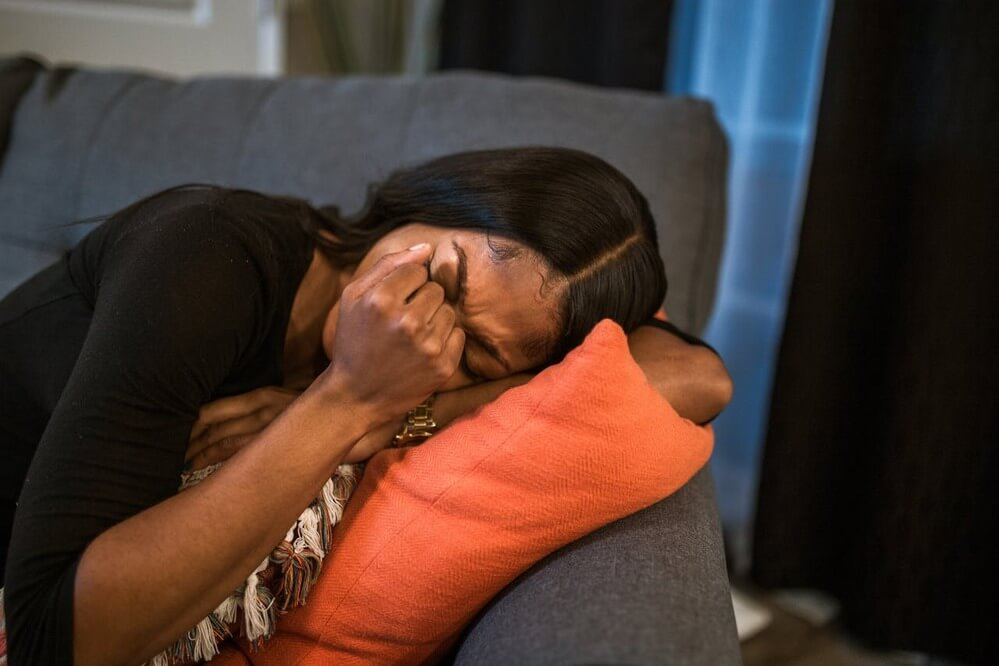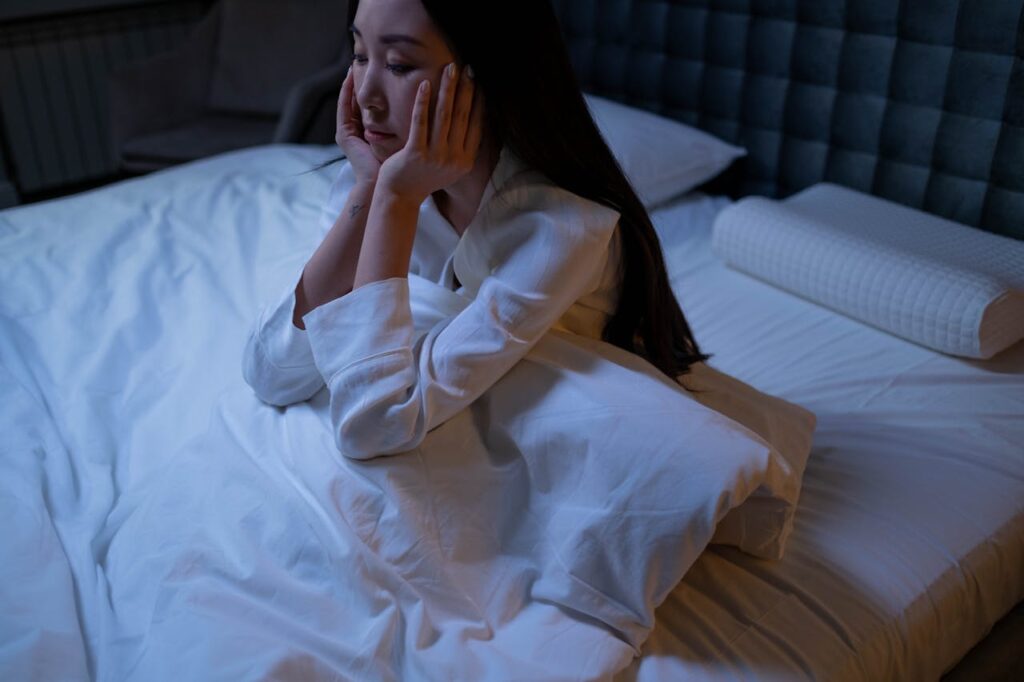
You finally get the baby down. The house is quiet . Your eyes sting and your body is tired enough to collapse. So you lie down, expecting to drift off almost instantly. But instead, you’re wide awake, your chest feels tight, and your mind starts going through a list of things that could go wrong.
Why can’t I just sleep?
This is one of the most confusing parts of postpartum anxiety and sleep deprivation, and it catches many first-time moms off guard. Because the problem isn’t just that you’re tired, it’s that your body doesn’t feel safe enough to rest.
How Sleep Deprivation and Postpartum Anxiety Feed Each Other
This doesn’t happen randomly. It’s a cycle.
You lose sleep=more anxiety
More anxiety =less sleep
And before you know it, you’re stuck in a loop that feels impossible to break.
During the day, you’re busy, constantly alert, listening to every sound, watching every movement and responding to every need. So when night comes, your body doesn’t know how to switch off. It stays on guard, even when nothing is wrong.
Why You Feel “Tired but Wired” at Night
When you’re exhausted but your body is not cooperating, it’s usually because your nervous system is stuck in a heightened state of awareness.
You’ve spent the entire day responding to cries, anticipating needs, and staying mentally “on”. So when things finally go quiet at night, your brain doesn’t relax, it keeps searching. Did I miss something? Is the baby okay?
Consequently, that mental activity makes it incredibly difficult to fall asleep, even when you need it the most.
Can Sleep Deprivation Cause Postpartum Anxiety?
Yes. Running on little sleep doesn’t just make you tired. It also affects how your brain processes stress, emotions, and simple thoughts.
When you are sleep deprived:
- Your emotional responses become stronger
- Your ability to think clearly drops
- Your body stays in a stressed state for longer
Research published on Oxford Academic has shown that postpartum insomnia and poor sleep quality can in fact predict higher anxiety symptoms in new mothers, meaning the lack of sleep doesn’t just come from anxiety, it can actively make it worse.
Therefore, what you’re feeling is not random. It is your brain running without enough recovery.
Why Postpartum Anxiety Feels Worse at Night
Day time has a lot of distractions. There is always something to do and your attention is pulled in a hundred different directions. At night however, everything slows down. Suddenly, there is space for your thoughts to get louder. And so you might notice more tension in your body, more intrusive thoughts and more “what if” scenarios.
This is why nighttime anxiety feels heavier.
Why the “Sleep When the Baby Sleeps” Advice Fails For Moms With Postpartum Anxiety
You’ve heard it before. ” Just sleep when the baby sleeps.”
And while it sounds simple, this advice assumes your body is calm enough to sleep whereas the truth is that you’re not just tired, you’re alert. So even when you try to reset, your body resists it. You are therefore stuck between exhaustion and being awake which is frustrating.
Small Changes That Help Break the Sleep-Anxiety Cycle?
You don’t need a perfect routine to start seeing changes, Small consistent signals that tell your body “it’s safe to rest.” can help.
You can start by:
- Keeping the lights low during night feeds
- Avoid checking your phone constantly
- Step out of bed for a few minutes if you can’t sleep after a while
- Get morning sunlight when possible
While these aren’t instant fixes, they slowly help retrain your system. Moreover, when you feel your anxiety start to build up, simple routines can help you calm you down. This guide: Daily Habits That Help Reduce Postpartum Anxiety Without Medication, explains in detail how to reduce the intensity and perhaps even quiet the mental noise completely.
What to Do When Your Mind Won’t Slow Down
Sometimes, the biggest barrier to sleep isn’t your body, its your thoughts. When your mind keeps racing, it can help to interrupt that cycle. Here are some simple grounding actions to lower that mental noise so you can get some decent sleep:
- Write down every nagging thought before bed
- Play some consistent low-frequency noise
- Tense and then slowly release your muscles from your toes to your face.
- Practice slow breathing
With these, you’re not trying to force sleep. You’re making it easier for sleep to happen.
If You Feel Stuck in This Cycle
If you find yourself stuck in this pattern night after night, it’s worth paying attention to. Struggling to sleep occasionally is one thing, but feeling unable to relax even when your baby is sleeping and safe can be a sign that your anxiety needs more support.
You can read more about that here: When to seek help for postpartum anxiety
And if you haven’t already, this article breaks down the full picture of what postpartum anxiety can look like: Postpartum anxiety in first-time moms: real symptoms, hidden triggers and what helps
Start With One Small Reset Tonight
If your mind is already racing at night, don’t wait until things feel overwhelming. Start small by downloading this 5-minute postpartum reset routine.
It’s designed for moments when:
- Your thoughts won’t slow down
- Your body feels tense
- You’re exhausted but still alert
Sometimes, having something simple to follow can make it easier to settle, even just a little.
This Isn’t Your New Normal
Right now, it might feel like your body has forgotten how to rest, like sleep is no longer available to you. But this isn’t permanent.
It’s a cycle your system has fallen into, and with the right support, it can shift.