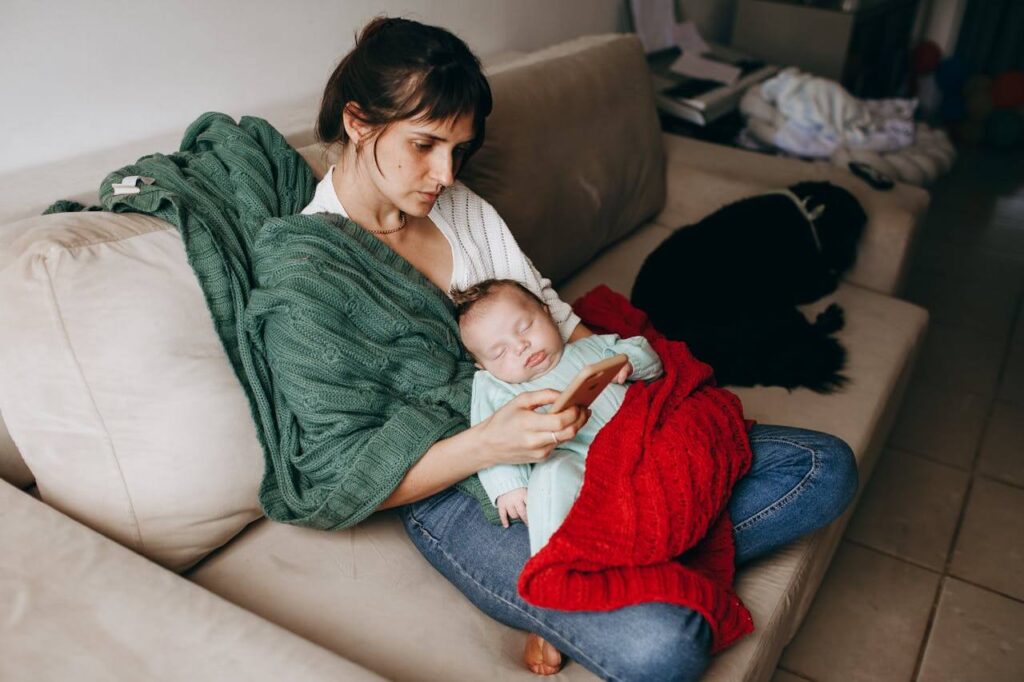
You expected the exhaustion. The 3:00 AM feeds. The long days that somehow blur into each other. What you didn’t expect was this.
The constant tension in your chest.
The way your mind won’t switch off, even when your baby is finally asleep.
The intrusive thoughts that show up out of nowhere and refuse to leave.
Therefore, at some point, a quiet question starts forming in the background:
Is this still normal… or do I actually need help?
That question matters more than you know. Because while some level of worry is part of new mom motherhood, postpartum anxiety can cross a line where support is no longer optional.
Let’s walk through how to recognize that line, without fear, without guesswork, and without dismissing what you are feeling.
When to Seek Help for Postpartum Anxiety?
It’s hard to trust your judgement when you’re sleep-deprived and overwhelmed. Everything feels intense, such that it becomes difficult tell what’s “normal” anymore.
But here is a simple way to look at it:
If your anxiety stays constant, feels uncontrollable, or starts interfering with daily life, it’s time to reach out for support. Not later. Not when it gets worse. Now. Because postpartum anxiety is treatable, the earlier you act, the easier it is to manage.
Clear Signs It’s Time to Seek Professional Help.
The truth is that most new moms worry. However, normal new mom worry, comes and goes, while postpartum anxiety stays, grows and becomes a cycle.
Instead of second guessing yourself, look for patterns like this:
1. Scary thoughts don’t pass, they stay
It’s one thing to have quick scary thoughts. Most moms do. But this feels different because you keep reliving it.
You walk past the stairs and your mind immediately plays a vivid scenario of your baby falling. You try to shake it off, but it comes back. Again. And again. And so you wonder, ” why can’t I stop thinking like this?”
If such kind of thoughts feel stuck, repetitive, or disturbing, that is not something you should try to power through.
2. You can’t rest, even when you have the chance
Your baby is asleep. Everything is okay. You finally have a chance to rest, but instead, you’re wide awake just staring at the ceiling with your heart racing. Your mind is alert and scanning for possible problems as well as feeling like you’re on edge for no clear reason.
That “tired but wired” feeling is a major signal your nervous system is overwhelmed.
3. Anxiety is changing your behaviour to feel safe
At first, it feels like being careful. Checking if the baby is breathing…. once… twice… . Then suddenly it’s happening every few minutes.
Additionally, you start avoiding things like letting someone else hold the baby, leaving the house or even basic care routines. Not because you want to, but because it actually feels safer not to.
When your need for “safety” starts making your world smaller and leaving you totally isolated, it’s a clear signal to get support.
4. You’re snapping, overwhelmed, or on the edge
No one talks about this enough.
Sometimes anxiety doesn’t look like fear. It looks like anger. You might find yourself snapping over something small, feel irritated all the time or you’re one minor inconvenience away from shutting down or exploding.
And then comes the guilt. “Why am I reacting like this?”, you wonder.
Well, this “postpartum rage” is usually just a result of your brain being so overloaded.
5. You have constant tension in your body
Anxiety isn’t just mental, it manifests physically too:
- Tight chest
- Constant headaches
- A stomach that’s always in knots
- Constant tensed shoulders
Many moms have reported feeling like their body is bracing for something that never happens. This is actually the nervous system stuck in survival mode
“What If It’s Not That Bad Yet”?
Many moms delay getting help simply because they feel it’s mild or don’t feel “anxious enough”.
You don’t need to hit rock bottom to deserve support. You could be functioning… ensuring the baby is the baby is well taken care of, you’re still getting things done and generally everything looks fine on the outside. But on the inside you could be feeling stretched thin, on edge and never fully at peace.
You thinking, “it’s not that bad, I’ll manage,” could keep you stuck in survival mode longer than necessary which is not only draining, it could also end up affecting your bonding experience with your baby.
Getting help early is not overreacting, it’s prevention.
What Happens If You Do Reach Out for Help
Getting help doesn’t automatically mean medication. It can look like:
- Talking to a therapist who understands postpartum mental help
- Joining a support group with other moms who get it
- Learning tools to calm your nervous system
- In some cases, discussing medication as one option, not the only option
Organizations like Postpartum Support International can help connect you with the right kind of support. You don’t have to figure this out alone.
If You’re Not Ready for Professional Help Yet
Maybe part of you knows you need support but another part feels hesitant.
That’s okay. You can start small.
If your anxiety feels intense but you are not sure what to do next, begin with something immediate and simple. Try this 5-Minute Reset Routine for Postpartum Anxiety (free printable) to calm your body when everything else feels overwhelming, your thoughts start spiraling, or your chest feels tight.
It won’t replace professional help, but it will give you something real to hold on to in the moment.
You Deserve to Feel Safe in Your Own Mind
Right now you might be feeling out of control. Like you can’t relax. You are always watching. Always thinking. You can’t fully enjoy your baby and even when things are okay, they don’t feel okay.
But this is not your forever. And more importantly, this is not something you have to push through alone.
If a part of you is wondering whether you need help, listen to that part. Realizing that “This feels like too much” isn’t a weakness on your part. It’s awareness.