Your baby wants to be held, but your arms need a break, you might want to do some chores around the house and the carrier you bought for outings might feel like too much equipment for walking between the bedroom and living room. The best baby carrier for around the house should suit those ordinary moments: settling a fussy baby, folding a few clothes or keeping your little one close while you move through the day.
That doesn’t mean everyone needs the same soft wrap. Some parents want buckles they can fasten without help. Others prefer fabric without a padded waistband, or a sling for repeated short carries.
These five options offer different ways to carry the baby at home, with particular attention to setup, bulk and the stage when each makes the most sense.
Disclosure: As an Amazon Associate, I earn from qualifying purchases. This article contains affiliate links. If you buy through them, I may earn a commission at no additional cost to you.
Quick Picks
- Best for soft newborn carrying without tying: Ergobaby Embrace
- Best for accessible front fastenings: BabyBjörn Mini, 3D Jersey
- Best adjustable wrap alternative: Momcozy Air Mesh Baby Wrap
- Best traditional stretchy wrap: Cuddlebug Baby Wrap
- Best for short carries once you know the fit: Boba Bamboo-Linen Ring Sling
How We Chose These Baby Carriers
We compared product features, fitting instructions and written owner feedback for the jobs a carrier actually does at home. We considered putting it on, supporting a young baby, distributing weight, switching between caregivers, removing the baby and dealing with everyday washing.
This is a researched guide, not a hands-on test. We examined written owner feedback, including brand-hosted and retailer reviews, some of which are syndicated or incentivized. Individual experiences illustrate how a carrier performs; they do not establish universal results.
1. Ergobaby Embrace: Best for Soft Newborn Carrying
Key Specs
- Carrier type: Soft buckle carrier
- Baby weight range: 7–25 pounds; minimum height 20 inches
- Fabric: Soft ponte knit
- Fastening and adjustment: Buckled waistband and adjustable cross-back shoulder straps
- Carry positions: Front inward-facing; front outward-facing when manufacturer requirements are met
- Care: Machine wash cold; air dry
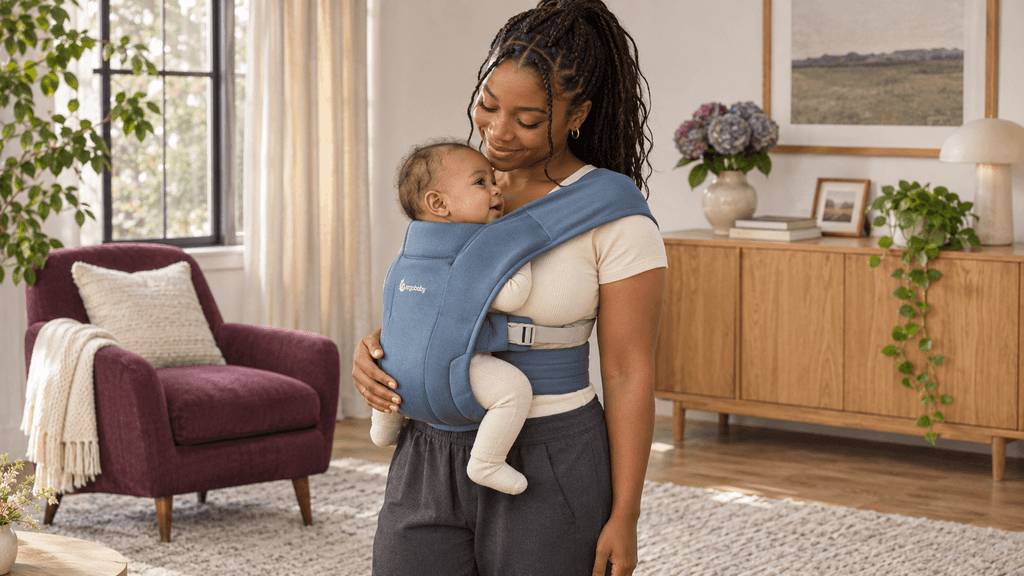
The Embrace is our first choice for parents who want the closeness of a soft carrier without learning to tie a long wrap. Its knit body flexes around you and your baby, while the waistband and cross-back straps provide a defined support system. That combination is useful when you want to walk around with your newborn but dislike the bulk of a more substantial outing carrier.
The spreadable straps distribute the load across your shoulders, while the waistband provides support around your torso. Folding the waistband in newborn mode shortens the panel and narrows the seat for a smaller baby without a separate infant insert.
The buckle system avoids trailing wrap ends, and adjustable straps allow caregivers to share the carrier. Machine washing is useful for everyday spit-up.
One parent described it as their go-to carrier around the house because they found it soft and easy to put on alone when wrapping felt too time-consuming. Another preferred its support to the wraps they had used previously.
Shoulder-strap management is the main drawback. Owners in separate discussions describe fabric riding toward their neck or needing repeated repositioning. We see it primarily as an early-stage purchase; carrying comfort may decline before the 25-pound maximum.
Pros
- Soft panel, spreadable straps and waistband combine flexibility with support
- Buckles eliminate the need to tie long wrap tails
- Adjustable newborn configuration without a separate insert
- Owners specifically describe convenient home use and solo setup
Cons
- Some owners report repeatedly adjusting the shoulder fabric
- Newborn waistband configuration requires learning
- A shorter carrying window than larger structured carriers
Check the Ergobaby Embrace on Amazon
2. BabyBjörn Mini, 3D Jersey: For Front Fastenings and Adjustable Head Support
Key Specs
- Carrier type: Compact buckle carrier
- Baby weight range: 7–24 pounds; minimum height 21 inches
- Fabric: 3D Jersey
- Fastening and adjustment: Adjustable harness, front fastenings, adjustable seat and head support
- Carry positions: Front inward-facing; front outward-facing when manufacturer requirements are met
- Care: Machine wash; air dry according to the fabric care label
The Mini brings together accessible front fastenings, adjustable baby support and a small footprint. It is particularly worth considering if you want a defined harness but find crossed straps behind your back awkward. Its 3D Jersey fabric provides a softer alternative to the substantial panels and belts of some larger carriers.
The adjustable seat and head support are central benefits. The seat adjustment accommodates your baby’s growth, while the head support provides structure before your baby’s reliable head control. For a young baby who wants to be held while awake, having that support can matter as much as how quickly you can fasten the carrier.
One owner described preferring the Mini to their K’tan carrier at that stage, valuing supported inward-facing carrying while their baby could look around.
Keep the head support configured according to the instructions until your baby has the required head control.
Its removable front section adds another everyday advantage. You can open the carrier to lift your baby out rather than working them upward through a fixed fabric opening. That is useful when transferring them to a crib or bassinet.
Owners also praise easy setup and adjustment between parents. That matters during handovers: one caregiver can take over carrying while the other rests or handles another task. A review displayed by Target specifically appreciated the small footprint because the baby disliked bulkier carriers. The lack of a substantial waistband also leaves less equipment around your middle.
However, that compactness has a limitation. Without a supportive waist belt, more of the carrying load rests through your upper body. One owner found it became heavy around 15–16 pounds despite liking it earlier. This makes the Mini more compelling for convenient early carrying than for extended use with a heavier baby.

Pros
- Adjustable seat and head support for early carrying
- Front fastenings reduce awkward back-reaching
- Entire front section opens for baby removal
- Soft fabric and compact design; owners praise easy setup and caregiver adjustment
Cons
- Less opportunity to distribute weight through the hips
- Owner feedback includes discomfort as babies become heavier
- No back-carry option
Check the BabyBjörn Mini on Amazon
3. Momcozy Air Mesh Baby Wrap: For an Adjustable Wrap With Less Fabric to Organize
Key Specs
- Carrier type: Adjustable two-piece wrap
- Baby weight range: 8–33 pounds in current manufacturer support guidance; follow the supplied model label
- Fabric: Stretch air mesh
- Fastening and adjustment: Adjustable main section with a separate outer support sash
- Carry positions: Front inward-facing
- Care: Machine wash according to the supplied care label
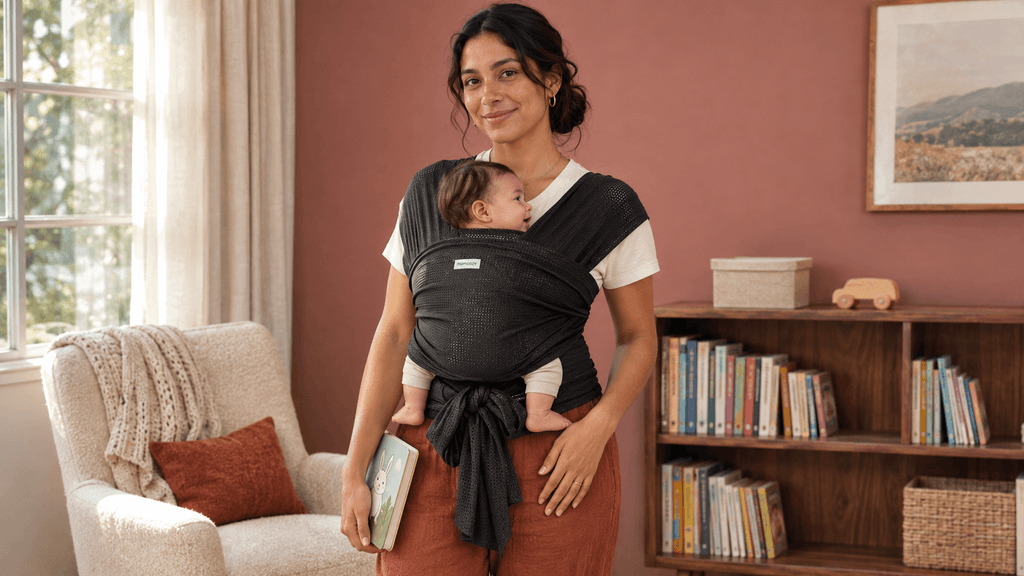
This Momcozy combines an adjustable, clothing-like main section with a separate support sash. It is a useful middle option when you want soft wrap-style carrying around the house but do not want to arrange one long piece of fabric around your body each time.
The adjustable fit is important for everyday sharing. Unlike a wrap selected in one adult clothing size, it allows differently sized caregivers to adjust the same carrier. The main section needs correct tension, and the outer sash must also be fitted.
Its broad fabric sections spread over the shoulders and torso without a rigid padded belt. That can appeal if you dislike structured equipment around your waist. The mesh also offers an alternative to denser wrap fabric, although overlapping fabric and your baby’s body heat still make this a warm activity.
Written reviews on Momcozy’s mesh-wrap page support several benefits. Verified buyers describe easy adjustment, soft fabric and a breathable feel. One preferred the mesh for summer, while another praised washing convenience.
The main limitation is shoulder coverage: broad fabric can get in the way when raising your arms. The separate sash also adds a fitting step, even though the overall design reduces the amount of fabric you need to organize.
Pros
- Adjustable fit makes sharing more practical
- Two-piece setup avoids managing a full-length wrap
- Broad fabric support without a rigid waistband
- Verified buyers praise adjustment, fabric feel and washing convenience
Cons
- Separate support sash must be correctly fitted
- Broad shoulder coverage can interfere with overhead reaching
- Listing weight limits are inconsistent
Check the Momcozy Air Mesh Baby Wrap on Amazon
4. Cuddlebug Baby Wrap: For a Traditional Stretchy-Wrap Fit
Key Specs
- Carrier type: Long stretchy wrap
- Baby weight range: 7–35 pounds
- Fabric: Cotton–polyester blend in the linked gray listing
- Fastening and adjustment: Wrap around the torso and shoulders; secure with a double knot
- Carry positions: Front inward-facing
- Care: Machine wash cold on a gentle cycle; follow the supplied drying instructions
Cuddlebug offers a customizable fabric setup without a fixed harness. You determine the tension as you wrap, spread the shoulder sections and form the seat around your baby. There are no fixed harness dimensions or buckle positions to work around, making it worth considering if those features have felt uncomfortable in other carriers.
The support comes from how the fabric is arranged, not simply its stretchiness. The prescribed tie spreads fabric across both shoulders and around the torso, while the seat supports your baby’s bottom and thighs. Correct tension keeps the baby close rather than allowing them to hang lower as you walk. At home, that close fit can make gentle movement feel less cumbersome than a bulky carrier, provided the wrap has been tied correctly.
Sharing is another benefit: different caregivers can tie it to their own shape without purchasing another wearer size. It is machine washable, and the absence of hardware leaves you with fabric to fold away.
However, those same long ends need managing while you put it on. This is a better fit for someone willing to practice than someone hoping to avoid a wrapping routine altogether.
The accessible gray-wrap feedback includes owners describing babies settling readily and appreciating the close hold. One liked assembly but also reported that their baby became hot. That is a useful limitation for indoor use, particularly in a warm room.
Choose Cuddlebug if you value a customizable fabric fit enough to learn the tie. If wrapping would discourage you from using it, a buckle carrier is the more practical purchase.

Pros
- Customizable tension and shoulder coverage
- Distributes the load across both shoulders and the torso
- No buckle hardware or rigid waist belt
- Shareable fit and machine-washable construction
Cons
- Tying and achieving secure tension require practice
- Long fabric ends need managing during setup
- An owner specifically reported warmth in use
Check the Cuddlebug Baby Wrap on Amazon
5. Boba Bamboo-Linen Ring Sling: For Short, Repeated Carries
Key Specs
- Carrier type: Woven ring sling
- Baby weight range: 8–35 pounds
- Fabric: 52% bamboo viscose, 48% linen
- Fastening and adjustment: Fabric threaded through two rings; tighten sections individually
- Carry positions: Front inward-facing; hip carry when developmentally appropriate
- Care: Machine wash according to the supplied care label
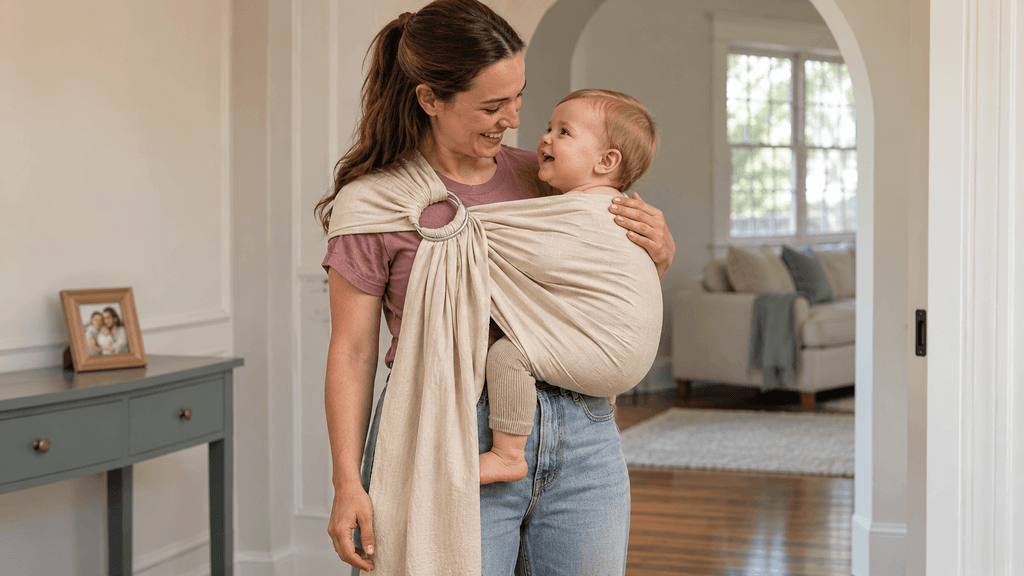
The Boba ring sling suits repeated short pickups once you have learned threading and seat formation. There is no waistband or back buckle to fasten, and caregivers can adjust the same sling to fit.
Its woven fabric and single-shoulder arrangement avoid the full torso wrapping routine of a stretchy wrap. That leaves less to fasten around your middle and gives parents who dislike waist-belt pressure another option. The fabric also folds compactly, making it easy to keep the sling nearby without a large carrier occupying the sofa or chair.
Owners on the same product line’s Rye Brown page describe lightness, summer comfort and convenient packing. One reported that initial stiffness softened after washing.
You can fine-tune different parts of the fabric, but removing slack evenly takes more technique than pulling one strap. Allow time to learn that technique before relying on it for quick pickups.
Its one-shoulder loading makes it a stronger choice for short carries than prolonged carrying with a heavier baby.
Pros
- No waist belt or back buckle
- Adjustable between caregivers
- Compact fabric design is easy to keep nearby
- Owners praise lightness and packing convenience
Cons
- Load is concentrated through one shoulder
- Threading, seat formation and tightening take practice
Check the Boba Bamboo-Linen Ring Sling on Amazon
What Matters When Choosing a Carrier for Home Use?
Match the Setup to Your Carrying Pattern
For frequent pickups, prioritize a fastening routine you can repeat comfortably. For longer stretches, pay closer attention to weight distribution and whether adjustments stay put. When trying a carrier, practice the complete sequence: put it on, load and position your baby, walk around, then take them out.
Check Baby Support and Your Own Comfort Separately
A carrier can hold your baby appropriately while still pressing uncomfortably on your waist or tiring your shoulders. Check your baby’s supported position first, then assess whether you can stand and move naturally without compensating for the load.
Try the Movements You Actually Need
Walk through a doorway, reach for a book at chest height and check whether the straps restrict your arms. If another caregiver will share the carrier, have them practice fitting it too. This reveals more than judging comfort while standing still for a minute.
Safe Babywearing Around the House
Keep your baby upright, with their face visible, nose and mouth clear, and chin away from their chest. Check positioning after loading, after adjustments and regularly during use. Follow all minimum weight, height and developmental requirements. Ask a health professional about carrying a premature or medically vulnerable baby.
A carrier does not make every household job suitable. Avoid cooking near heat, handling hot drinks above your baby or cleaning with hazardous chemicals while wearing them. Put your baby somewhere appropriate before awkward reaching, repeated bending or any activity that compromises balance or attention.
Stay awake and attentive. If your baby falls asleep in the carrier, the American Academy of Pediatrics recommends transferring them to their back on a firm, flat sleep surface as soon as possible.
Frequently Asked Questions
Do You Need a Separate Carrier for Around the House?
No. If your existing carrier fits, feels comfortable indoors and is easy enough to use, keep using it. A second carrier makes sense when it addresses an identifiable problem such as excessive bulk, difficult fastenings, disliked waist pressure or a wrapping routine you avoid.
Can You Sit Down While Wearing Your Baby?
Only if the carrier’s instructions permit it and both of you retain a comfortable, correct position. Sitting changes the relationship between your torso, thighs and carrier, so recheck the baby’s airway and support. If the baby becomes compressed or the fit changes awkwardly, take them out. Never recline or fall asleep while wearing a baby.
Does a Higher Weight Limit Mean Longer Comfortable Use?
No. A maximum weight is a boundary for use, not a comfort rating. Consider how securely your baby fits and how you feel during carrying, rather than buying for the highest number.