Finding the best baby carriers for breastfeeding takes more than checking whether a product description says “nursing-friendly.” You need a carrier that fits you and your baby, allows useful adjustments and remains comfortable during the carrying that happens between feeds.
A ring sling gives you fabric to adjust through rings. A buckle carrier offers a more structured fit, usually with a waistband and padded straps. A stretchy wrap gives you a soft, close fit, but moving baby into a feeding position and tightening everything afterward can take more work. None guarantees that your baby will latch comfortably while wearing it.
These six options offer different combinations of feeding access, support and everyday convenience.
Disclosure: As an Amazon Associate, I earn from qualifying purchases. This article contains affiliate links. If you buy through them, I may earn a commission at no additional cost to you.
Our Picks at a Glance
- Adjustable baby support: Tula Explore Linen
- Panel and strap customization: Boba X
- Mesh and lumbar support: Ergobaby Omni Breeze
- Adjustable ventilation: LÍLLÉbaby Complete All Seasons
- Soft wrap comfort: Boba Serenity Wrap
- Packable ring sling: Nalakai Ring Sling
How We Chose These Baby Carriers
We researched buckle carriers, stretchy wraps and ring slings, checking manufacturer product information and feeding guidance against written owner accounts and published parent testing. This is a research-based comparison.
We assessed each option using the same criteria:
- Feeding access and adjustment: What changes to accommodate feeding, where the controls sit and whether adjustment involves straps, rings or retying fabric.
- Returning to a carrying fit: What needs tightening or repositioning afterward, rather than judging convenience only at the start of a feed.
- Parent and baby fit: Seat and panel adjustment, strap configuration, head support and the effect of different body proportions.
- Everyday comfort: Shoulder and waist support, fabric feel, ventilation, seated bulk and usefulness between feeds.
- Practical ownership: Cleaning, packing, sharing between caregivers and how the carrier adapts as baby grows.
- Quality of supporting evidence: Whether an account describes actual feeding, which model it concerns and whether the product was gifted or the testimonial selected by the brand.
We kept four buckle carriers because their combinations differ: Tula Explore pairs adjustable baby support with linen-blend fabric; Boba X combines nursing-access adjusters with panel adjustment; Omni Breeze offers mesh and multiple strap configurations; Complete All Seasons combines lumbar padding with a zip-down ventilation panel. Boba Serenity and Nalakai add a traditional wrap and a ring-adjusted option for parents who prefer fabric-based carrying.
Before You Buy a Carrier for Breastfeeding
Guidance on feeding in a carrier differs. The NHS advises against feeding baby in a sling or carrier. Some manufacturers provide nursing instructions, while the US Consumer Product Safety Commission emphasizes repositioning after feeding so baby’s face is clear of the carrier and your body.
Taking baby out for feeds is the straightforward option if you are uncertain. If you are considering feeding in a carrier, discuss it with a qualified babywearing educator or lactation professional and follow the instructions for your exact model. This comparison is buying advice, not a positioning tutorial.
“Hands-free carrier” describes carrying. It does not mean feeding is hands-free. You still need to monitor baby and provide the support required during feeding. A hood or sling tail must not obstruct baby’s face. Being within a carrier’s weight range also does not establish readiness to feed in it.
1. Tula Explore Linen Baby Carrier — Adjustable Baby Support
Key Specs
- Carrier type: Soft structured buckle carrier.
- Baby weight range: 7–45 pounds; position-specific requirements apply.
- Fabric: Linen and cotton blend; check the selected version’s label for composition.
- Fastening and adjustment: Buckled waistband and shoulder straps; adjustable seat width and neck-support pillow.
- Carry positions: Front inward-facing, front outward-facing and back carry, when developmentally appropriate.
- Care: Machine washable according to the sewn-in care label.
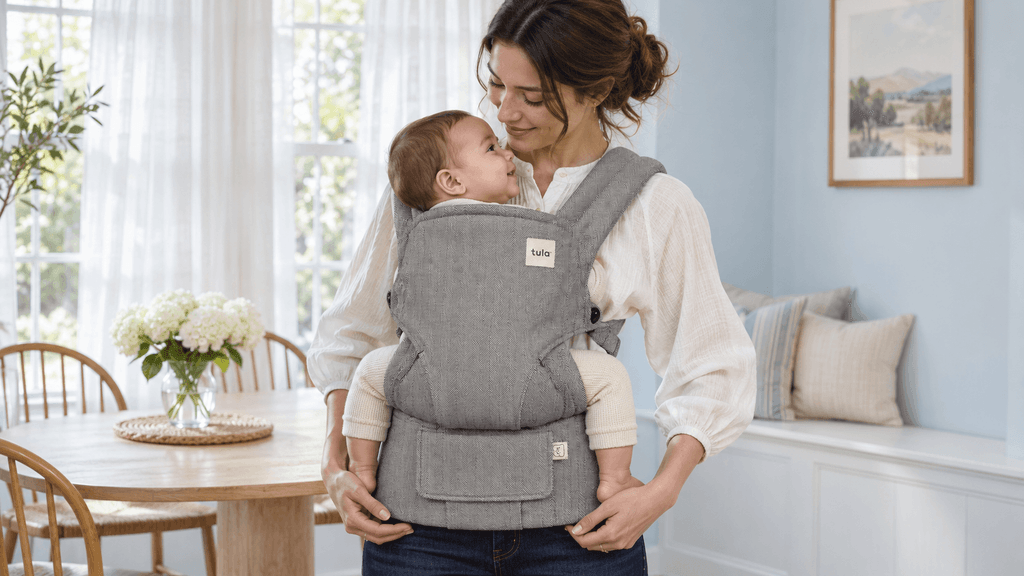
The Tula Explore is worth considering if you want a supportive everyday carrier that can also accommodate nursing adjustments. Its seat settings and adjustable neck pillow help adapt the fit as baby grows, while the padded shoulder straps and waistband are relevant to the much larger part of the day spent carrying rather than feeding.
Tula’s nursing guidance specifically describes adjusting the shoulder straps and waistband without opening buckles. That gives us a concrete reason to consider it for this article. The hood is an optional privacy feature, but the adjustment system is the more important buying consideration.
The linen version gives shoppers a fabric alternative to polyester mesh, but “linen” should not be treated as a guarantee of a cool carry: padding, clothing and close contact still matter. Its structured waistband also makes this a different experience from sitting in a soft wrap. Check whether it presses into your body when seated, and whether you can comfortably reach the rear fastening.
There is nursing-specific owner feedback, too. In a parent discussion about breastfeeding carriers, one Tula Explore owner reported successful feeding and described the carrier as soft yet sturdy enough to adjust comfortably. That is one family’s experience, not proof that the Explore suits every breast height or baby.
Best suited to: Parents who want adjustable baby support and a structured carrier for regular outings as well as possible feeding use.
Pros
- Manufacturer describes feeding adjustments without undoing buckles.
- Adjustable seat and neck support accommodate changing fit needs.
- Padded straps and waistband support everyday carrying.
- Offers additional carrying positions beyond the feeding stage.
Cons
- Rear fastening may be awkward for some wearers to reach.
- Structured padding and waistband add bulk when sitting or packing it.
- Successful nursing still depends on parent proportions and baby’s preferences.
Check the Tula Explore Linen on Amazon
2. Boba X Baby Carrier — Panel and Strap Customization
Key Specs
- Carrier type: Soft structured buckle carrier.
- Baby weight range: 7–45 pounds; position-specific requirements apply.
- Fabric: Cotton in the linked Grey version.
- Fastening and adjustment: Buckled waistband, crossable shoulder straps, breastfeeding-access adjusters and adjustable panel height and width.
- Carry positions: Front inward-facing and back carry; follow the current model manual.
- Care: Gentle machine wash according to the sewn-in care label.
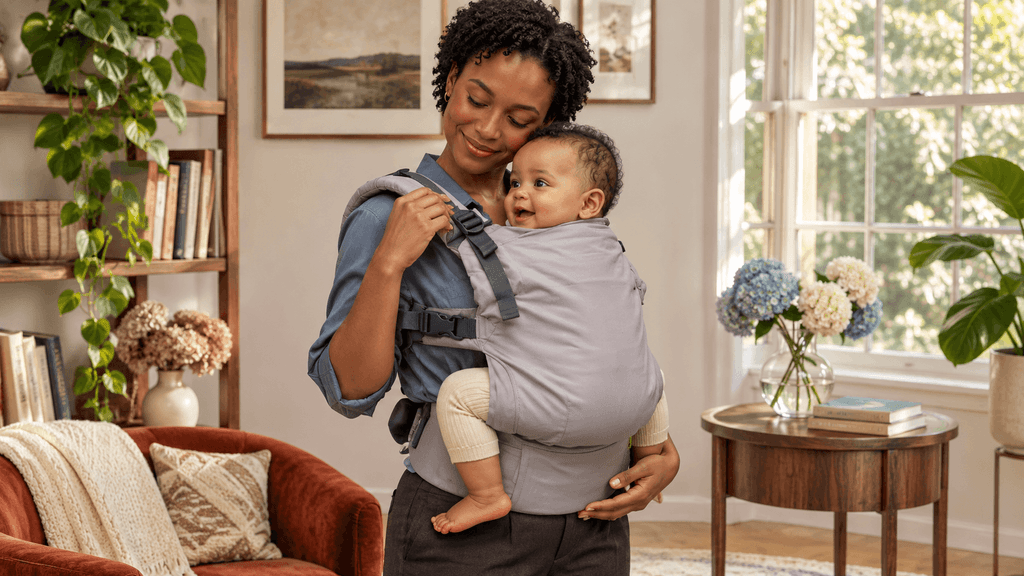
The Boba X combines feeding-access adjustments with a body panel that changes in both height and width. That combination is useful if you want to keep using a familiar carrier as baby grows, rather than choose solely around the first few months of feeding.
Boba documents dedicated breastfeeding-access adjustment buckles. They provide room for repositioning without treating every feed as a complete removal-and-restart. Crossable shoulder straps give another way to adapt the fit to your upper body, while the adjustable panel and toddler seat extensions address the growing child’s support needs.
Those contrasting feeding experiences are exactly why the Boba X earns consideration without earning a universal “easiest” label. A helpful buckle cannot make an unwilling baby prefer an upright latch. Nor does a 45-pound limit mean the carrier will fit comfortably through every stage for every family.
The strongest practical evidence comes from Mumsnet’s two-parent testing. One tester successfully breastfed her 11-month-old in the carrier. The other found that her newborn did not like feeding upright and instead left the carrier secured at her waist while feeding outside it. The same review describes supportive longer wear and easy adjustment between caregivers, alongside warm fabric.
Best suited to: Parents who value detailed fit adjustment, crossed-strap flexibility and continued carrying as baby grows.
Pros
- Dedicated nursing-access adjustments.
- Panel height and width can be adapted to baby.
- Crossable shoulder straps offer flexibility for the wearer.
- Published parent testing covers both successful feeding and unsuccessful upright feeding.
Cons
- Cotton construction and padding can feel warm.
- No outward-facing carrying option.
- More fit adjustments to understand than a simple sling.
Check the Boba X in Grey on Amazon
3. Ergobaby Omni Breeze Baby Carrier — Mesh Construction and Carrying Support
Key Specs
- Carrier type: Soft structured buckle carrier.
- Baby weight range: 7–45 pounds; minimum height and position-specific requirements also apply.
- Fabric: Polyester SoftFlex mesh.
- Fastening and adjustment: Buckled waistband with lumbar support, adjustable seat and shoulder straps that can be crossed or worn backpack-style.
- Carry positions: Front inward-facing, front outward-facing, hip and back carry, when permitted by the manual.
- Care: Machine wash cold and air dry, following the care label.
The Omni Breeze deserves consideration when nursing access is one requirement within a wider need for comfortable walks, shared use and ventilation. Its mesh construction, lumbar-support waistband and two shoulder-strap configurations offer a combination that the nursing buckle on another model does not replace.
The mesh is a reason to consider it for warm-weather use, not a promise that neither parent nor baby will sweat. Likewise, lumbar padding may improve comfort for some wearers; it cannot guarantee relief from back pain. The important question is whether the waistband and straps let you achieve a comfortable fit on your body.
Ergobaby provides nursing guidance for its carrier range, but check the current Omni Breeze manual rather than copying instructions for a different Omni generation. Also consider how the waistband feels while seated and whether the mesh feels comfortable against exposed skin. Airflow and softness are separate buying questions.
In her five-month Omni Breeze account, parent Gemma Field describes comfortable longer walks, sharing the carrier with her husband and preferring backpack-style straps because she found them easier to adjust. She also reports straightforward breastfeeding with nursing-access clothing, while questioning how that would change as baby grew. Those details support considering several benefits together, without assuming her experience will transfer to every wearer.
Best suited to: Parents seeking mesh construction, supportive carrying features and flexible strap setup for outings between feeds.
Pros
- Mesh construction offers a fabric alternative to the cotton buckle carriers here.
- Lumbar support and padded straps address carrying comfort.
- Crossed or backpack-style strap options.
- A parent account discusses both actual breastfeeding and sustained everyday use.
Cons
- Structured waistband can feel bulky while sitting.
- Several settings need to be learned and checked.
- Mesh does not eliminate heat from close contact.
Check the Ergobaby Omni Breeze on Amazon
4. LÍLLÉbaby Complete All Seasons Baby Carrier — Adjustable Ventilation
Key Specs
- Carrier type: Soft structured buckle carrier.
- Baby weight range: 7–45 pounds; position-specific requirements apply.
- Fabric: Cotton outer construction with a ventilated mesh panel.
- Fastening and adjustment: Buckled waistband with lumbar support, adjustable shoulder straps and convertible seat.
- Carry positions: Six manufacturer-described configurations covering front, hip and back carrying; follow the manual’s developmental requirements.
- Care: Machine washable according to the sewn-in care label.
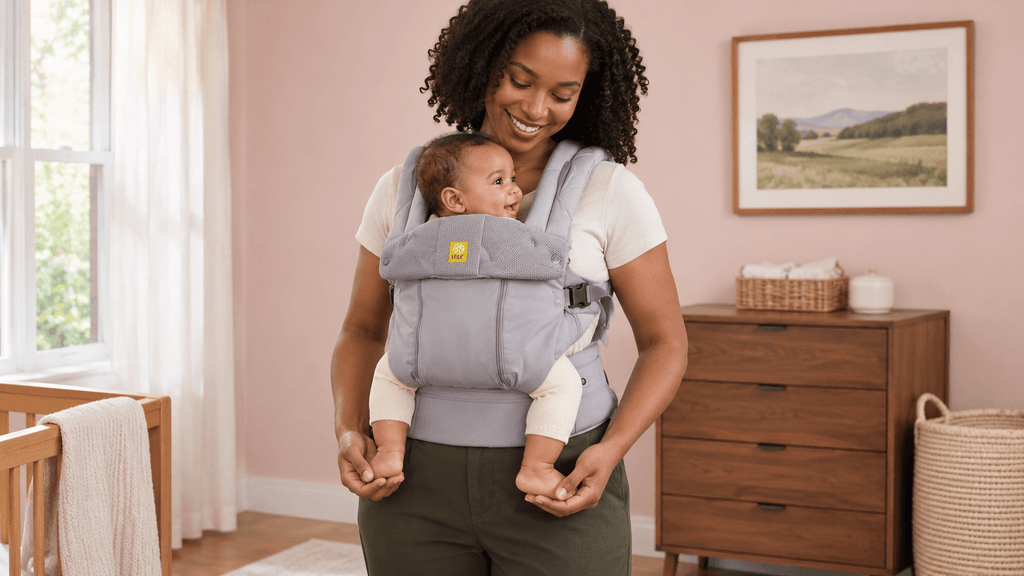
The Complete All Seasons combines a supportive waistband and shoulder padding with a zip-down panel that exposes mesh. That makes it worth considering for parents who want ventilation they can change, rather than an always-mesh body or a solid cotton panel.
LÍLLÉbaby describes dual-adjustment shoulder buckles as useful for breastfeeding adjustments. Its site also hosts a Complete nursing demonstration for an older baby or toddler. Neither establishes that a newborn will nurse comfortably in the carrier, but both give a more concrete basis than a vague nursing-friendly label.
The case for the All Seasons therefore rests on its documented adjustments and its combined carrying features, with a thinner body of current nursing-specific evidence than we would prefer. Check your reach to the adjusters, seated comfort and the effort involved in changing the seat setting. The lumbar panel and ventilation are meaningful features, but neither makes the whole carrier compact.
A gifted-product review of an older Organic Complete demonstrates nursing but describes difficulty reaching the adjusters. That is useful context about checking reach, but it is not evidence that today’s All Seasons has the same problem.
Best suited to: Parents who want a structured carrier with lumbar padding and an adjustable ventilation panel, and can check the fit before committing.
Pros
- Zip-down panel allows a change between covered fabric and exposed mesh.
- Lumbar support and padded straps provide multiple fit considerations.
- Documented breastfeeding-adjustment features.
- Convertible seat and multiple carrying configurations extend its usefulness.
Cons
- Padded construction takes up more room than a wrap or sling.
- Seat conversion and strap adjustments require familiarity.
- Current-model nursing-specific owner evidence is limited in our research.
Check the LÍLLÉbaby Complete All Seasons on Amazon
5. Boba Serenity Wrap — Soft Wrap Comfort
Key Specs
- Carrier type: Traditional stretchy wrap.
- Baby weight range: 7–35 pounds according to the linked listing; weight capacity is not a promise of comfortable use to the upper limit.
- Fabric: 68% bamboo-derived viscose, 25% cotton and 7% spandex.
- Fastening and adjustment: Long fabric tied around the wearer; fit adjusted through fabric tension and tying.
- Carry positions: Front inward-facing carry.
- Care: Machine washable at low temperature according to the care label.
The Serenity offers a different experience from the buckle carriers: soft fabric spreads across both shoulders and your back without a firm waistband or plastic hardware. If you already like wrapping, that can make it appealing for close carrying around feeds and for sitting without a rigid belt.
Boba’s wrap support guidance covers breastfeeding and returning baby to a snug carrying fit afterward. The practical limitation is that a wrap distributes adjustment through fabric. You need to restore the tension after repositioning; it is not simply a matter of pulling one strap.
The Serenity earns its place for parents who prefer a wrap’s feel and are willing to learn it. It is less convincing as a purchase solely to make feeding adjustments quicker. Fabric layers can also feel warm, and the long ends need managing when tying away from home. The listed maximum weight should not be confused with the point at which you personally want more structured support.
Boba’s Serenity product page features a selected owner testimonial that mentions easy breastfeeding alongside soft fabric and carrying comfort. Other visible owner reviews discuss regular use and manageable wrapping.

Best suited to: Parents who enjoy a soft wrap and want close carrying between feeds, with the patience to learn feeding-related readjustment.
Pros
- Soft, stretchy fabric without buckles or a rigid waistband.
- Fabric spreads over both shoulders and the back.
- Manufacturer provides nursing and post-feed adjustment guidance.
- Machine washable for milk spills and spit-up.
Cons
- Tying and restoring tension take practice.
- Long fabric ends can be awkward outside the house.
- Layered fabric can feel warm; heavier babies may prompt a move to more structure.
Check the Boba Serenity on Amazon
6. Nalakai Ring Sling — A Packable Ring-Adjusted Option
Key Specs
- Carrier type: Woven ring sling.
- Baby weight range: 8–35 pounds, according to manufacturer guidance.
- Fabric: Bamboo-derived viscose and linen blend.
- Fastening and adjustment: Fabric threaded through two rings; tension adjusted through the sling’s fabric.
- Carry positions: Front inward-facing and hip carry as instructed; no outward-facing or back carry.
- Care: Follow the supplied care label; confirm the washing method for the selected sling.
The Nalakai is worth considering if you want an adjustable fabric carrier without tying a long wrap or wearing a padded waistband. Fabric moves through the rings, while the wide section across the back helps spread the load. It can also pack into a bag more readily than a bulky structured carrier.
The main limitation comes from the design itself: this is a one-shoulder carrier. Its compactness and accessible rings can be appealing for repeated short carrying periods, while an evenly fitted two-shoulder carrier may suit some parents better for longer wear or a heavier child. Correct threading and a secure seat still need learning; rings do not make that automatic.
Nalakai’s own instructions limit use to front and hip carries. Do not borrow positions from a different ring-sling brand. Also check the selected sling’s length: extra tail can be manageable for one wearer and cumbersome for another. Fabric used for privacy must leave baby’s face unobstructed.
There is a specific first-person feeding account rather than just a manufacturer’s promise. In Mom After Baby’s review, the writer describes loosening the sling to feed, supporting baby and tightening it again afterward. She also discusses soft fabric and carrying comfort. The sling was gifted by Nalakai, which matters when weighing that positive experience.

Best suited to: Parents who want a packable, ring-adjusted option and are comfortable learning an asymmetric carry.
Pros
- No long wrap knot or structured waistband.
- Accessible fabric adjustment through rings.
- Soft woven fabric and relatively compact construction.
- A disclosed gifted-product review describes actual nursing and readjustment.
Cons
- Load is carried asymmetrically across one shoulder.
- Threading, tension and seat formation need practice.
- Tail length and fabric management vary with wearer size.
Check the Nalakai Ring Sling on Amazon
What Matters Most When Comparing Breastfeeding Carriers?
Adjustment you can actually reach
An adjustment buckle is only useful if you can operate it while providing the necessary support for baby. Look at its location, the direction the webbing pulls and how much movement is available. If a carrier is already tightened to its limit on your frame, or sits awkwardly against your chest, the nursing-friendly description will not fix that mismatch.
Your proportions and baby’s feeding preferences
Breast height, torso length, breast shape and baby’s size affect the distance and support needed for a comfortable latch. Cup size alone cannot tell you which carrier to buy. A baby who prefers a different feeding position may need to come out even when the carrier has useful adjustments.
Comfort between feeds
A carrier may spend far more time supporting a walk, an errand or an unsettled baby than accommodating feeding. Consider shoulder pressure, waistband comfort while seated, fabric feel, warmth, head support and whether another caregiver will use it. Choosing only for nursing can leave you with a carrier you dislike wearing for everything else.
Readjustment and cleaning
Check what has to happen after the feed: tightening shoulder webbing, moving fabric through rings or restoring tension throughout a wrap. Then consider the ordinary mess. A machine-washable carrier still needs drying time, and heavily padded sections can leave you without it while they dry. Follow the exact model’s care label rather than a generic carrier-cleaning tip.
Frequently Asked Questions
Is a ring sling better than a buckle carrier for breastfeeding?
Neither design works best for everyone. A ring sling offers fabric adjustment without a waistband, but uses one shoulder and requires careful tensioning. A buckle carrier offers a more structured fit and two-shoulder support, but its straps and waistband must suit your body. The better choice is the one you can fit and adjust properly, and that accommodates your baby’s feeding needs.
Can I buy one before my baby arrives?
You can choose a carrier for carrying, provided you follow its newborn requirements. Feeding in it is harder to predict before you know your baby’s latch and preferences. Check the return policy and access to fit support rather than buying on a promise of easy nursing.
Does a nursing hood make a carrier better for breastfeeding?
A hood offers optional privacy, not easier latching or better adjustment by itself. The carrier’s fit and accessible controls matter more. Keep baby’s face visible and unobstructed, and follow the exact product instructions.
Can I keep baby in the feeding position after they fall asleep?
Do not leave baby low or loosely supported against the breast after feeding. CPSC guidance calls for repositioning so baby’s head and face are clear of the carrier and your body. If baby falls asleep, follow safe-sleep guidance and move them to an appropriate firm, flat sleep surface on their back as soon as possible.