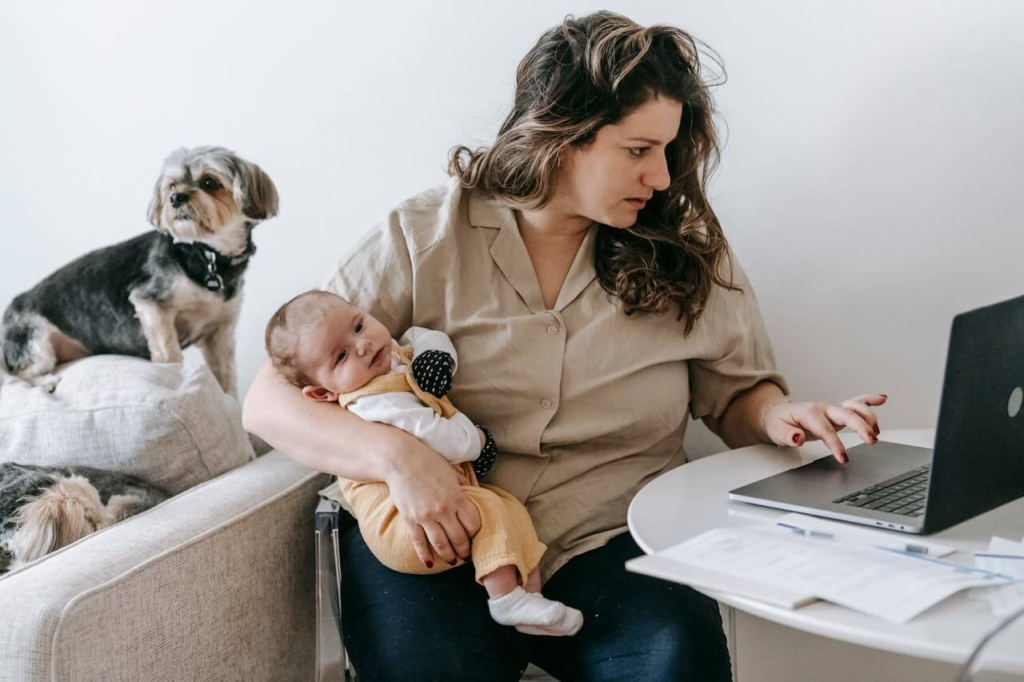
You are sitting with with a cup of tea wanting to relax. Your baby is safe, fed and sleeping and yet you find yourself unable to just sit. You find yourself wondering quietly: “Why won’t this fear switch off, even now, even when there is genuinely nothing to worry about in this moment?” You try to talk yourself down. But you end up checking on baby anyway. And it works, briefly. The feeling settles. But then the fear comes back, and it’s not because anything changed.
It may not always be loud, but it is present. The constant background worry. A feeling that something could go wrong at any moment. Even in calm moments, your body does not fully relax.
If you keep wondering why the fear feels constant after having a baby, you are not imagining it, and you are not failing as a mother.
Many new mothers expect worry in the early weeks. What surprises them is how hard it can be to switch off. Even when the baby is okay. Even when logic says everything is fine and you’re are desperate for rest.
This kind of fear is often linked to postpartum anxiety, nervous system overload, sleep deprivation, and the huge emotional adjustment that comes with caring for a newborn.
The good news is that constant fear can improve. But first, it helps to understand why it feels so relentless.
Why the Fear Feels Constant After Having a Baby
Almost every new mom experiences worry and ordinary worry has a rhythm to it. Something triggers it, you feel concerned, you solve the issue, and the feeling settles again.
But postpartum fear often works differently.
After birth, your brain becomes more sensitive to anything related to your baby’s safety. This is partly biological. You are learning a new role, your body has just gone through major hormonal shifts and on top of that, sleep is often broken or severely reduced.
That combination can place your nervous system in a state of ongoing alertness. Instead of responding only to real problems, your brain begins scanning for possible problems.
It does not settle or wait for a trigger. Your brain is simply always ready. It watches, it listens. It rehearses danger regardless of what is actually happening around you.
That is why constant fear postpartum can feel present even when nothing is wrong.
Why You Can’t Switch Off Even When Everything Is Fine
Many mothers say the hardest part is not the fear itself, it is the inability to rest from it.
You finally get a quiet moment, the baby is asleep, the room is calm. Ordinarily, this should feel like relief but instead your mind enters into a loop of what ifs: “What if something happens while I rest?” “What if I miss a sign?” “What if this calm doesn’t last?” “What if I should be checking something right now?”
This happens because your brain reinforces the idea that switching it off would be dangerous. Vigilance starts to feel like the thing keeping your baby safe, even when logic tells you otherwise.
Consequently, you stay alert and the fear stays switched on.
Why Calm Can Feel Unsafe After Postpartum Anxiety
One of the least talked about parts of postpartum anxiety is this: Sometimes peace can feel uncomfortable.
When you’ve been going through sustained anxiety for weeks or months, calm becomes unfamiliar. And anything unfamiliar can feel suspicious to an already stressed nervous system.
You get an hour where everything feels okay and for a brief moment the fear loosens its grip. And instead of resting into that, you feel something close to dread. Like the calm is a warning rather than a relief. Like something must be wrong because things feel too quiet. And then, thoughts start looping again. “Why is it so quiet?” “I should check on the baby again.” “Something feels off.”
This does not mean intuition is warning you. It usually means your body has become used to tension for so long that calm starts to feel wrong and therefore unsafe.
That can change with time and support.
What Constant Postpartum Fear Can Look Like
Not everyone experiences it in the same way.
- You wake up and the fear is already there before the day has even started. Before you have opened your eyes properly, your mind is already scanning. Already checking. Already asking whether your baby is okay, whether you missed something yesterday, whether today will be the day something goes wrong. The day has not even started and you are already braced for it.
- You check the monitor repeatedly even after seeing your baby is fine
- You feel unable to nap while someone else watches the baby
- You replay things from before and worry you missed something important
- You feel uneasy during peaceful moments
- You ask for reassurance, feel better briefly, then feel anxious again
- You struggle to enjoy motherhood because your mind rarely rests
If this feels familiar, you are far from alone.
Why Reassurance Only Helps for a Moment
If you have found yourself always anxious after having your baby, there is a good chance you have also noticed that checking helps but only briefly.
You look at the monitor or maybe place your hand on the baby’s chest to checking if they are still breathing and the fear eases. Two minutes later, the feeling is back and you check again. You ask your partner if they think the baby seems okay. They say yes. You settle briefly. You search online for symptoms, you feel better for a few minutes and then more questions resurface.
This is one of the ways the fear sustains itself.
Every time you seek reassurance and feel temporary relief, your brain learns that checking is what makes the fear go away. So, the next time the fear arrives, it demands another check.
This creates a cycle where reassurance feels necessary, but never fully solves the problem.
How to Start Calming a Nervous System That Won’t Switch Off
The goal here is not to stop being anxious overnight. It is to very gradually reduce the intensity of the constant hum so that you get some breathing room back. Small things, done consistently, can shift the baseline over time.
Start with tiny pauses
Sit with uncertainty for just slightly longer than feels comfortable before seeking reassurance. Not indefinitely. Not forcing yourself to endure distress. Just pausing for one or two minutes before checking again, or asking the question again, or running through the mental checklist again.
That small pause, repeated over time, begins to show your brain that uncertainty does not require an immediate response. The fear does not have to be acted on the moment it arrives.
Notice what is true right now
Practice noticing the good moments rather than bracing against them. When the fear loosens slightly, instead of waiting for it to return, try naming what is actually present. Your baby is breathing. The room is safe. You are here. This is enough for right now.
This teaches your nervous system that calm is safe done in small moments, not large ones.
Protect your nervous system from extra stress
Stay way or reduce inputs that keep anxiety high such as doom scrolling, scary parenting advice and stories, constant symptom searching, and overstimulating content at night.
Build basic regulation habits
Eat regularly, hydrate, get some sunlight, accept help from other responsible adults, rest when possible and lower expectations during the hard seasons. These habits may seem small, but they do matter.
Speak kindly to yourself
Fear often adds shame but try replacing “what’s wrong with me?” with “my nervous system is overwhelmed right now.” Shift from criticizing yourself for checking on your baby.
When to Get Extra Support
If the fear has not gone away after weeks of trying to manage it on your own such that it is affecting your daily life, makes it hard to function, sleep, eat, causes panic and stops you from leaving the house seeking practical help from family or speaking to professionals who specialize in postpartum mental health is not a last resort. It is just the next sensible step when what you are carrying has become too heavy to carry alone.
This Fear is Not Your Personality
Many women quietly wonder if motherhood permanently changed them into an anxious woman.
Usually, that is not what happened. What happened is you entered the biggest physical, emotional, and identity transitions of your life, and your nervous system responded by becoming overprotective.
That response can soften. You can feel calm again, and you can enjoy peaceful moments again.
Final Thoughts
If you keep asking why the fear feels constant after having a baby, the answer is usually not that danger is everywhere. It’s that your nervous system has been working too hard for a very long time. That matters, because a tired nervous system can heal.
The fact that it has not switched off yet does not mean it never will. And needing support does not mean you are weak.
If you are still trying to make sense of where all this fear started in the first place, the post Why Am I Scared Something Will Happen To My Baby? looks at the root of the fear and why it takes hold so completely in early motherhood. If you find yourself unable to sleep because you keep checking on your baby during sleep hours, read Why Do I Keep Checking If My Baby Is Breathing At Night? for more insight.
FAQ
Is it normal to feel constant fear after having a baby?
Some worry is common after birth, but ongoing fear that affects sleep, functioning, or peace of mind may be sign of postpartum anxiety.
Why can’t I relax when my baby is sleeping?
Your brain may be associating vigilance with safety. When this happens, rest can feel uncomfortable even when nothing is wrong.
Why does checking the baby monitor only help briefly?
Checking not only gives short-term reassurance, it can reinforce the anxiety cycle and increase the urge to check again later.
Does postpartum anxiety go away?
Yes, many women improve significantly with time, support, therapy, lifestyle changes, or medical treatment when needed.